Source: Globe Newswire
The CDMA Development Group (CDG) today announced that it has been accepted as a Market Representation Partner (MRP) by the 3rd Generation Partnership Project (3GPP). Under this strategic marketing partnership, the CDG agrees to facilitate the interworking of CDMA2000(R) and LTE technologies on behalf of the CDMA community to support future LTE deployments. Likewise, the CDG's status as an MRP strengthens 3GPP's LTE advocacy amongst existing CDMA operators as they seek to expand their market leadership by complementing their 3G CDMA offerings with OFDM-based technologies.

Thursday, October 29, 2009


Bytemobile and Camiant Announce Interoperability for Mobile Broadband and LTE Solutions
Source: Camiant press release
Bytemobile, Inc., the global leader in mobile internet solutions for wireless network operators, and Camiant, Inc., the leading provider of policy control and application assurance technology, today announced a joint interoperability partnership. The two companies will focus on collaboratively integrating Bytemobile’s Unison™ Mobile Internet Platform and Camiant’s Multimedia Policy Engine (MPE) to deliver intelligent traffic management solutions and value-added data services for operators as they continue to evolve mobile broadband services including those utilizing Long-Term Evolution (LTE) 4G networks and beyond.
Bytemobile, Inc., the global leader in mobile internet solutions for wireless network operators, and Camiant, Inc., the leading provider of policy control and application assurance technology, today announced a joint interoperability partnership. The two companies will focus on collaboratively integrating Bytemobile’s Unison™ Mobile Internet Platform and Camiant’s Multimedia Policy Engine (MPE) to deliver intelligent traffic management solutions and value-added data services for operators as they continue to evolve mobile broadband services including those utilizing Long-Term Evolution (LTE) 4G networks and beyond.
Wednesday, October 28, 2009
Voice Over LTE: Many Questions, No Easy Answers
Source: Unstrung Insider
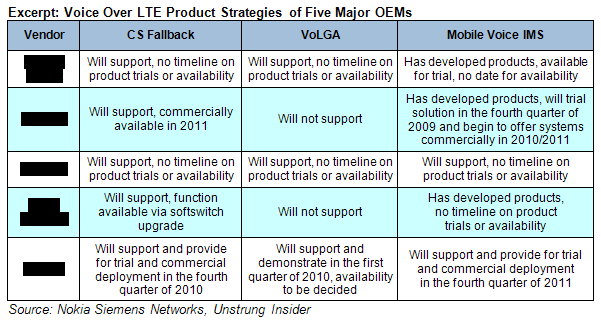
Most in the mobile industry agree that Long Term Evolution (LTE) technology is the way forward for data: It can support impressive data rates and has the potential to revolutionize mobile communications with a host of innovative, high-bandwidth applications. Yet for all the promise inherent in its blazing speeds, LTE still needs a commercially and technically acceptable solution for dealing with the industry's cash-cow voice service. Although declining, voice still accounts for more than 75 percent of wireless services revenue.
Voice Over LTE: Many Questions, No Easy Answers analyzes the various scenarios envisioned by the mobile communications industry for providing voice over LTE. It examines the different options vendors are proposing and the difficult choices facing mobile operators that view voice as essential to the successful launch of their new next-generation networks. Finally, the report also profiles 11 companies, exploring their voice over LTE strategies.
Most in the mobile industry agree that Long Term Evolution (LTE) technology is the way forward for data: It can support impressive data rates and has the potential to revolutionize mobile communications with a host of innovative, high-bandwidth applications. Yet for all the promise inherent in its blazing speeds, LTE still needs a commercially and technically acceptable solution for dealing with the industry's cash-cow voice service. Although declining, voice still accounts for more than 75 percent of wireless services revenue.
Voice Over LTE: Many Questions, No Easy Answers analyzes the various scenarios envisioned by the mobile communications industry for providing voice over LTE. It examines the different options vendors are proposing and the difficult choices facing mobile operators that view voice as essential to the successful launch of their new next-generation networks. Finally, the report also profiles 11 companies, exploring their voice over LTE strategies.
Tuesday, October 27, 2009
T-Mobile and Huawei Complete Testing on World' s First LTE Self-Organizing Network
Source: Huawei press release
Huawei, a leader in providing next-generation telecommunications network solutions for operators around the world, today announced that it has successfully completed the world' s first test for LTE self-organizing network (SON) with T-Mobile in Innsbruck, Austria. Through the solution' s ability to configure, optimize and recover automatically, the LTE SON will offer operators operational cost savings associated with network planning, network deployment and network optimization.
Huawei, a leader in providing next-generation telecommunications network solutions for operators around the world, today announced that it has successfully completed the world' s first test for LTE self-organizing network (SON) with T-Mobile in Innsbruck, Austria. Through the solution' s ability to configure, optimize and recover automatically, the LTE SON will offer operators operational cost savings associated with network planning, network deployment and network optimization.
MIIT submits China's 4G standard to ITU
Source: TeleGeography
Sohu IT reports that China's Ministry of Industry and Information Technology (MIIT) has submitted China's TD-LTE-Advanced technical specification to the International Telecommunication Union (ITU), thereby ensuring that the technical specification will be considered as an international standard candidate for 4G communications. TD-LTE-Advanced (LTE-Advanced TDD spec) is the next-generation successor to the Chinese-developed TD-SCDMA platform.
Sohu IT reports that China's Ministry of Industry and Information Technology (MIIT) has submitted China's TD-LTE-Advanced technical specification to the International Telecommunication Union (ITU), thereby ensuring that the technical specification will be considered as an international standard candidate for 4G communications. TD-LTE-Advanced (LTE-Advanced TDD spec) is the next-generation successor to the Chinese-developed TD-SCDMA platform.
Verizon: No Capex 'Blip' for LTE
Source: Unstrung
Despite an aggressive deployment plan for Long Term Evolution (LTE) in the U.S., Verizon Communications Inc. said today that the cost of rolling out the proto-4G mobile broadband network would not cause a spike in capital spending.
Despite an aggressive deployment plan for Long Term Evolution (LTE) in the U.S., Verizon Communications Inc. said today that the cost of rolling out the proto-4G mobile broadband network would not cause a spike in capital spending.
Hitachi Takes Nortel's LTE Packet Core
Source: Unstrung
Hitachi Ltd. is putting up $10 million to acquire some of Nortel Networks Ltd. 's packet core assets, the companies announced today.
Hitachi Ltd. is putting up $10 million to acquire some of Nortel Networks Ltd. 's packet core assets, the companies announced today.
Monday, October 26, 2009
All three South Korean mobile operators are now on LTE migration path
According to news sources in South Korea, LG Telecom (LGT) quietly revealed their intention to migrate to LTE for 4G service in South Korea. LG-Nortel and Samsung will provide the multi-mode base stations which are part of the company's green network upgrade. SKT and KTF (now part of KT), the other two mobile operators in the country, have already announced their LTE migration path for 4G previously. Unlike SKT and KTF who will migrate from HSPA to LTE, LGT will go from EV-DO to LTE, similar to the case of Verizon Wireless.
It was probably a matter of time for LGT to announce the LTE migration plan since it was only running EV-DO network, and this officially puts LGT on the LTE camp. Now, my speculation is that other major EV-DO operators (noticeably, Sprint) who haven't announced such plans will follow the same path down the road since WiMAX does not seem to be a viable migration path for the FDD part of the network.
See related articles (in Korean) from here and here.
- Hyung
It was probably a matter of time for LGT to announce the LTE migration plan since it was only running EV-DO network, and this officially puts LGT on the LTE camp. Now, my speculation is that other major EV-DO operators (noticeably, Sprint) who haven't announced such plans will follow the same path down the road since WiMAX does not seem to be a viable migration path for the FDD part of the network.
See related articles (in Korean) from here and here.
- Hyung
LTE Implementation Strategies to Vary Across Asia-Pacific, Says Informa Telecoms & Media
Source: Tech-On
Japan will make up more than half of Asia-Pacific's forecast 14.4 million Long Term Evolution (LTE) subscribers by the end of 2015, according to Informa Telecoms & Media. NTT DoCoMo and smaller Japanese data-centric cellco, eMobile, will be among the first to launch LTE services in the region, with DoCoMo planning commercial availability in December 2010 using the 2100MHz spectrum band.
NTT DoCoMo, eMobile and China Mobile will be the first to launch LTE services in the region, with Hong Kong operator CSL likely to follow shortly afterwards. And, although Asian mobile operators will be among the first to launch LTE services next year, implementation strategies will vary greatly across the Asia-Pacific region.
Japan will make up more than half of Asia-Pacific's forecast 14.4 million Long Term Evolution (LTE) subscribers by the end of 2015, according to Informa Telecoms & Media. NTT DoCoMo and smaller Japanese data-centric cellco, eMobile, will be among the first to launch LTE services in the region, with DoCoMo planning commercial availability in December 2010 using the 2100MHz spectrum band.
NTT DoCoMo, eMobile and China Mobile will be the first to launch LTE services in the region, with Hong Kong operator CSL likely to follow shortly afterwards. And, although Asian mobile operators will be among the first to launch LTE services next year, implementation strategies will vary greatly across the Asia-Pacific region.
Ericsson and Samsung cooperate for world's first LTE interoperability
Source: Ericsson press release
Ericsson and Samsung have successfully achieved interoperability between the world's first commercial LTE device from Samsung and the live network from Ericsson in Stockholm, Sweden - an important milestone in making 4G a reality.
Samsung and Ericsson have together developed necessary procedures to accomplish this end to end integration program. Through extensive testing in Stockholm, Samsung LTE dongles and Ericsson's infrastructure have complied with the industry standard for commercial deployment, 3GPP Release 8 March baseline.
Ericsson and Samsung have successfully achieved interoperability between the world's first commercial LTE device from Samsung and the live network from Ericsson in Stockholm, Sweden - an important milestone in making 4G a reality.
Samsung and Ericsson have together developed necessary procedures to accomplish this end to end integration program. Through extensive testing in Stockholm, Samsung LTE dongles and Ericsson's infrastructure have complied with the industry standard for commercial deployment, 3GPP Release 8 March baseline.
Huawei and Samsung to Conduct World' s First LTE IOT for Device Terminals
Source: Huawei press release
Huawei, a leader in providing next-generation telecommunications network solutions for operators around the world, and Samsung today jointly announced the world' s first LTE IOT (Interoperability Test) in Europe in November to verify the interpretability of LTE network infrastructures and device terminals.
The IOT will use LTE modems manufactured by Samsung on Huawei' s LTE trial network in Europe.
Huawei, a leader in providing next-generation telecommunications network solutions for operators around the world, and Samsung today jointly announced the world' s first LTE IOT (Interoperability Test) in Europe in November to verify the interpretability of LTE network infrastructures and device terminals.
The IOT will use LTE modems manufactured by Samsung on Huawei' s LTE trial network in Europe.
Genband, Kineto start voice-over-LTE trials with T-Mobile
Source: Telephony Online
Genband and Kineto Wireless are conducting one of the first trials of the proposed voice over LTE via the generic access network, or VoLGA, standard. Both are working with VoLGA’s biggest proponent T-Mobile on a network core trial to prove the viability of using legacy voice and messaging infrastructure to route voice-over-IP calls over future long-term evolution networks.
Genband and Kineto Wireless are conducting one of the first trials of the proposed voice over LTE via the generic access network, or VoLGA, standard. Both are working with VoLGA’s biggest proponent T-Mobile on a network core trial to prove the viability of using legacy voice and messaging infrastructure to route voice-over-IP calls over future long-term evolution networks.
NEC Selected for Telefonica's LTE Pilot Trial
Source: NEC press release
NEC Corporation announced today its selection as a supplier for Telefonica's LTE pilot trial. NEC was one of the six providers chosen for Telefonica's test projects which will be conducted in six different countries where the telecom operates.
NEC will participate in the trial which includes laboratory tests and the installation of e-node Bs in the field. NEC's wireless base stations are built in compliance with 3GPP (*1) mobile communications standards. In addition to featuring the world's top level amplifier efficiency, the systems can also be efficiently constructed and operated in an environmentally friendly way through the adoption of a variety of new technologies, including SON (Self Organizing Network).
NEC Corporation announced today its selection as a supplier for Telefonica's LTE pilot trial. NEC was one of the six providers chosen for Telefonica's test projects which will be conducted in six different countries where the telecom operates.
NEC will participate in the trial which includes laboratory tests and the installation of e-node Bs in the field. NEC's wireless base stations are built in compliance with 3GPP (*1) mobile communications standards. In addition to featuring the world's top level amplifier efficiency, the systems can also be efficiently constructed and operated in an environmentally friendly way through the adoption of a variety of new technologies, including SON (Self Organizing Network).
RadiSys To Deliver "LTE-Ready" Integrated ATCA Platform Solution
Source: RadiSys press release
RadiSys® Corporation, a leading global provider of advanced embedded solutions, today announced that it has partnered with Aricent and 6WIND to deliver application-ready platforms for the Long Term Evolution (LTE) Evolved Packet Core (EPC). Data traffic and mobile video usage are growing at a rapid pace, and Service Providers are demanding quick delivery of next-generation networks to satisfy ever-increasing consumer demand. Telecom Equipment Manufacturers (TEMs), in turn, are seeking solutions that enable shorter internal development cycles to deliver upon the time-to-market pressures they are facing. Pre-packaged network frameworks for building end deployable nodes provide TEMs with substantial savings in both time and cost for deployment. Through collaboration with Aricent and 6WIND, RadiSys can deliver its market-proven ATCA Promentum platform, a comprehensive LTE signaling stack and efficient data path software in one, fully-integrated solution that lowers development risk for TEMs and reduces time-to-market by as much as 18 months.
RadiSys® Corporation, a leading global provider of advanced embedded solutions, today announced that it has partnered with Aricent and 6WIND to deliver application-ready platforms for the Long Term Evolution (LTE) Evolved Packet Core (EPC). Data traffic and mobile video usage are growing at a rapid pace, and Service Providers are demanding quick delivery of next-generation networks to satisfy ever-increasing consumer demand. Telecom Equipment Manufacturers (TEMs), in turn, are seeking solutions that enable shorter internal development cycles to deliver upon the time-to-market pressures they are facing. Pre-packaged network frameworks for building end deployable nodes provide TEMs with substantial savings in both time and cost for deployment. Through collaboration with Aricent and 6WIND, RadiSys can deliver its market-proven ATCA Promentum platform, a comprehensive LTE signaling stack and efficient data path software in one, fully-integrated solution that lowers development risk for TEMs and reduces time-to-market by as much as 18 months.
Thursday, October 22, 2009
Samsung Provides LTE Devices to TeliaSonera for World’s First 4G/LTE Service Commercialization
Source: Korea News Wire

Samsung Electronics Co., Ltd., the leading mobile phone and equipment provider, today announced a contract with TeliaSonera to provide Long Term Evolution (LTE) devices. LTE technology is one of the most anticipated technologies for 4thgeneration (4G) mobile service in the telecommunications industry. According to the contract between Samsung and TeliaSonera, a leading telecommunication service provider in the Nordic and Baltic countries and the emerging markets of Eurasia head-quartered in Sweden, Samsung will provide mobile broadband devices for commercial service in Sweden and Norway next year.
“We are very pleased to work together with TeliaSonera for this historic step forward in the modern telecommunications industry. With TeliaSonera’s initiation of LTE service, we hope more consumers to enjoy advanced mobile broadband service much earlier than expected,” said JK Shin, executive vice president and head of the Mobile Communications Division at Samsung Electronics. “Samsung is committed to providing the best and the latest LTE devices to TeliaSonera and will fully support the commercial service in Sweden and Norway next year.”
Samsung Electronics Co., Ltd., the leading mobile phone and equipment provider, today announced a contract with TeliaSonera to provide Long Term Evolution (LTE) devices. LTE technology is one of the most anticipated technologies for 4thgeneration (4G) mobile service in the telecommunications industry. According to the contract between Samsung and TeliaSonera, a leading telecommunication service provider in the Nordic and Baltic countries and the emerging markets of Eurasia head-quartered in Sweden, Samsung will provide mobile broadband devices for commercial service in Sweden and Norway next year.
“We are very pleased to work together with TeliaSonera for this historic step forward in the modern telecommunications industry. With TeliaSonera’s initiation of LTE service, we hope more consumers to enjoy advanced mobile broadband service much earlier than expected,” said JK Shin, executive vice president and head of the Mobile Communications Division at Samsung Electronics. “Samsung is committed to providing the best and the latest LTE devices to TeliaSonera and will fully support the commercial service in Sweden and Norway next year.”
3GPP urges caution over IMT-Advanced promises
Source: Rethink Wireless
No fewer than six technologies have been submitted, seeking approval as official standards for IMT-Advanced, the next wave of wireless systems, which is designed finally to achieve 'true 4G' or gigabit stationary speeds (100Mbps mobile). Whereas a few years ago, few would have seen the need for such performance, now it seems operators can hardly wait to access the platforms that will let them support massive mobile broadband and multimedia usage, and while they may have years to wait for real 4G, they are increasing the momentum behind current technologies, LTE and WiMAX.
No fewer than six technologies have been submitted, seeking approval as official standards for IMT-Advanced, the next wave of wireless systems, which is designed finally to achieve 'true 4G' or gigabit stationary speeds (100Mbps mobile). Whereas a few years ago, few would have seen the need for such performance, now it seems operators can hardly wait to access the platforms that will let them support massive mobile broadband and multimedia usage, and while they may have years to wait for real 4G, they are increasing the momentum behind current technologies, LTE and WiMAX.
Interviews with the 3GPP Plenary Chairmen
Source: 3GPP
3GPP is achieving the goal of unifying the world behind a single cellular standard. This means that LTE and the Evolved Packet System (EPS) are applicable to an even wider set of deployment and migration scenarios than ever before.
At the September Plenary meetings, in Seville, Spain, Adrian Scrase - the Head of the 3GPP Mobile Competence Centre - interviewed each of the TSG Chairmen about the impact of this success on the way that they work and on the future of the Project.
* Service & Systems Aspects Chairman: Stephen Hayes
* GSM EDGE Radio Access Network Chairman: Andrew Howell
* Radio Access Network Chairman: Takehiro Nakamura
* Core Network & Terminals Chairman: Hannu Hietalahti
3GPP is achieving the goal of unifying the world behind a single cellular standard. This means that LTE and the Evolved Packet System (EPS) are applicable to an even wider set of deployment and migration scenarios than ever before.
At the September Plenary meetings, in Seville, Spain, Adrian Scrase - the Head of the 3GPP Mobile Competence Centre - interviewed each of the TSG Chairmen about the impact of this success on the way that they work and on the future of the Project.
* Service & Systems Aspects Chairman: Stephen Hayes
* GSM EDGE Radio Access Network Chairman: Andrew Howell
* Radio Access Network Chairman: Takehiro Nakamura
* Core Network & Terminals Chairman: Hannu Hietalahti
Interviews with the 3GPP Plenary Chairmen September 2009 from Peel Taggart on Vimeo.
LTE For PCs Near, Handsets Lagging
Source: InformationWeek
The first five years of Long-Term Evolution deployment will focus on PC data cards, says a market research firm.
Wireless carriers around the world are rushing to roll out Long-Term Evolution networks, but when the ultra-high-speed wireless technology makes its major debut next year, there likely won't be any handsets. Rather, initial LTE deployments will be provided on PC data cards, according to a report by Infonetics Research.
The first five years of Long-Term Evolution deployment will focus on PC data cards, says a market research firm.
Wireless carriers around the world are rushing to roll out Long-Term Evolution networks, but when the ultra-high-speed wireless technology makes its major debut next year, there likely won't be any handsets. Rather, initial LTE deployments will be provided on PC data cards, according to a report by Infonetics Research.
3GPP’s Scrase puts LTE-advanced in perspective
Source: Telephony Online
Standards group claims next wireless network will put up some big numbers, but numbers can be misinterpreted.
Standards group claims next wireless network will put up some big numbers, but numbers can be misinterpreted.
Monday, October 19, 2009
ZTE Opens LTE Testing Lab in the USA
Source: cellular-news
ZTE has opened a LTE testing laboratory at its U.S. headquarters in Richardson, Texas. In the lab, ZTE will demonstrate and test its dual-mode CDMA/LTE platform, which enables carriers to lay the foundation for the delivery of LTE services in the USA.
ZTE has opened a LTE testing laboratory at its U.S. headquarters in Richardson, Texas. In the lab, ZTE will demonstrate and test its dual-mode CDMA/LTE platform, which enables carriers to lay the foundation for the delivery of LTE services in the USA.
Alcatel-Lucent and SKT team on next generation LTE
Source: rethink wireless
Before LTE is even commercially deployed, the vendors are jockeying for position in the next generation of wireless standards. Both the LTE and WiMAX communities have submitted their upcoming standards, LTE Advanced and WiMAX 2.0, to the ITU for consideration as official standards for 'true 4G'. While we might not expect to see such systems in the field until the second half of the next decade, the suppliers want to establish their technology and patents credentials early, and Alcatel-Lucent is leading the field for now, with its Bell Labs R&D unit forming a strategic partnership with Korean operator SKT.
Before LTE is even commercially deployed, the vendors are jockeying for position in the next generation of wireless standards. Both the LTE and WiMAX communities have submitted their upcoming standards, LTE Advanced and WiMAX 2.0, to the ITU for consideration as official standards for 'true 4G'. While we might not expect to see such systems in the field until the second half of the next decade, the suppliers want to establish their technology and patents credentials early, and Alcatel-Lucent is leading the field for now, with its Bell Labs R&D unit forming a strategic partnership with Korean operator SKT.
Tecore Enhances Military Mobile Communications Platform With Intelligent Network Access Controller, Support for 3G and 4G LTE
Source: Tecore Networks press release
Tecore Networks, a global supplier of multi-technology 2G, 3G and 4G mobile network infrastructure, today announced the evolution of its Military Secured Rapid Deployment System (MilSec-RDS), a multi-technology voice and data communications platform built for use by the armed forces.
Tecore Networks, a global supplier of multi-technology 2G, 3G and 4G mobile network infrastructure, today announced the evolution of its Military Secured Rapid Deployment System (MilSec-RDS), a multi-technology voice and data communications platform built for use by the armed forces.
Friday, October 16, 2009
NTT DoCoMo paves all-IP path
Source: FierceTelecom
Claiming to be one of the first operators to make the switch to LTE, Japan's NTT DoCoMo is putting some juice into its IP core network by deploying Alcatel-Lucent's 7450 Ethernet Service Switch (ESS). The mobile operator will leverage the ESS to transform its network to all-IP, enabling it to deliver of course voice, but also high speed data and video services.
Claiming to be one of the first operators to make the switch to LTE, Japan's NTT DoCoMo is putting some juice into its IP core network by deploying Alcatel-Lucent's 7450 Ethernet Service Switch (ESS). The mobile operator will leverage the ESS to transform its network to all-IP, enabling it to deliver of course voice, but also high speed data and video services.
Thursday, October 15, 2009
Alcatel-Lucent Bell Labs conducts world-first field demonstration of Coordinated Multipoint Transmission (CoMP) on LTE network
Source: Alcatel-Lucent press release
Alcatel-Lucent today announced that Bell Labs, its research arm -- in cooperation with Deutsche Telekom Laboratories, the Fraunhofer Heinrich-Hertz Institut, and antenna supplier Kathrein -- has conducted the industry’s first live field tests of Coordinated Multipoint Transmission (CoMP) a new technology that will increase data transmission rates and help ensure consistent service quality and throughput on Long Term Evolution (LTE) wireless broadband networks as well as on 3G networks. By coordinating and combining signals from multiple antennas, CoMP, will make it possible for mobile users to enjoy consistent performance and quality when they access and share videos, photos and other high-bandwidth services whether they are close to the center of an LTE cell or at its outer edges.
Alcatel-Lucent today announced that Bell Labs, its research arm -- in cooperation with Deutsche Telekom Laboratories, the Fraunhofer Heinrich-Hertz Institut, and antenna supplier Kathrein -- has conducted the industry’s first live field tests of Coordinated Multipoint Transmission (CoMP) a new technology that will increase data transmission rates and help ensure consistent service quality and throughput on Long Term Evolution (LTE) wireless broadband networks as well as on 3G networks. By coordinating and combining signals from multiple antennas, CoMP, will make it possible for mobile users to enjoy consistent performance and quality when they access and share videos, photos and other high-bandwidth services whether they are close to the center of an LTE cell or at its outer edges.
Mobilkom Austria: committed but cautious on LTE, femtocells
Source: total telecom
Austrian mobile operator waits for decision on digital dividend spectrum before moving ahead on LTE.
Mobilkom Austria fully intends to deploy long-term evolution (LTE) and femtocell technology in its mobile network in the coming years, but the Telekom Austria-owned operator said it will need clarity on a number of issues first.
Austrian mobile operator waits for decision on digital dividend spectrum before moving ahead on LTE.
Mobilkom Austria fully intends to deploy long-term evolution (LTE) and femtocell technology in its mobile network in the coming years, but the Telekom Austria-owned operator said it will need clarity on a number of issues first.
Wednesday, October 14, 2009
Cisco buys Starent, boosting 4G strategy and outsmarting Juniper
Source: Rethink Wireless
Only a few weeks ago at the 4G World event in Chicago, Cisco was dismissing core networking specialist Starent as an unproven player "we hardly even notice". Apparently the IP giant's attention has sharpened in the meantime, since it has now paid a respectable $2.9bn to acquire the firm, solidifying an already powerful position in the mobile IP core. Starent should bring Cisco a strengthened presence in the US carriers and LTE, having gained a high profile deal for Verizon Wireless' 4G core, and the deal may also have been motivated by the need to outsmart Juniper, itself rumored to be adding Starent to Nokia Siemens in its anti-Cisco alliance.
Only a few weeks ago at the 4G World event in Chicago, Cisco was dismissing core networking specialist Starent as an unproven player "we hardly even notice". Apparently the IP giant's attention has sharpened in the meantime, since it has now paid a respectable $2.9bn to acquire the firm, solidifying an already powerful position in the mobile IP core. Starent should bring Cisco a strengthened presence in the US carriers and LTE, having gained a high profile deal for Verizon Wireless' 4G core, and the deal may also have been motivated by the need to outsmart Juniper, itself rumored to be adding Starent to Nokia Siemens in its anti-Cisco alliance.
Using a design-to-test capability for LTE MIMO
Source: RF Designline
This two-part article examines design-to-test and system simulation of Long Term Evolution (LTE) Multiple-Input Multiple-Output (MIMO), a technology has the potential to increase data rates for a single user. It does this by using multiple antenna techniques to transmit multiple and different streams of data.
The authors from Agilent Technologies. - Hyung
This two-part article examines design-to-test and system simulation of Long Term Evolution (LTE) Multiple-Input Multiple-Output (MIMO), a technology has the potential to increase data rates for a single user. It does this by using multiple antenna techniques to transmit multiple and different streams of data.
The authors from Agilent Technologies. - Hyung
Tuesday, October 13, 2009
Constant Wave Publishes LTE Waveform Generation Source Code
Source: Constant Wave press release
Constant Wave, a developer of innovative RF signal processing software, has published source code for LTE waveform generation on its web site at http://www.ConstantWave.com/lte_source_code.aspx . Releasing C++ source code to the public domain can simplify the implementation of this challenging standard. In addition, it allows users of Constant Wave’s Spectro LTE Gen software to examine the core algorithms that construct LTE signals. This is a key issue for standards which are still evolving, such as LTE.
Thanks to Matt for bringing this information to me! - Hyung
Constant Wave, a developer of innovative RF signal processing software, has published source code for LTE waveform generation on its web site at http://www.ConstantWave.com/lte_source_code.aspx . Releasing C++ source code to the public domain can simplify the implementation of this challenging standard. In addition, it allows users of Constant Wave’s Spectro LTE Gen software to examine the core algorithms that construct LTE signals. This is a key issue for standards which are still evolving, such as LTE.
Thanks to Matt for bringing this information to me! - Hyung
Mobile Broadband today and where LTE can lead us: GSA presentation at LTE Forum 2009
Source: GSA
Presentation by Alan Hadden, President, GSA at the LTE Forum 2009, Lisbon, October 8th, 2009.
Presentation by Alan Hadden, President, GSA at the LTE Forum 2009, Lisbon, October 8th, 2009.
Via Licensing Announces Development Efforts for an LTE Patent Pool
Source: Via Licensing press release
As a part of its ongoing effort to bring industry constituents together to advance the licensing of Long Term Evolution (LTE) essential patents and to define milestones for launching a successful LTE patent licensing program, Via Licensing organized a meeting with key LTE stakeholders on September 23, 2009. Thirteen companies from three continents, representing a broad spectrum of the LTE marketplace (including handset manufacturers, network equipment manufacturers, wireless carriers, chipmakers, and essential patent holders) discussed issues surrounding the development of an LTE joint patent licensing program (commonly referred to as a “patent pool”). The results of this interactive collaboration are intended to provide a solid framework for the efficient formation of a successful LTE patent pool.
As a part of its ongoing effort to bring industry constituents together to advance the licensing of Long Term Evolution (LTE) essential patents and to define milestones for launching a successful LTE patent licensing program, Via Licensing organized a meeting with key LTE stakeholders on September 23, 2009. Thirteen companies from three continents, representing a broad spectrum of the LTE marketplace (including handset manufacturers, network equipment manufacturers, wireless carriers, chipmakers, and essential patent holders) discussed issues surrounding the development of an LTE joint patent licensing program (commonly referred to as a “patent pool”). The results of this interactive collaboration are intended to provide a solid framework for the efficient formation of a successful LTE patent pool.
Monday, October 12, 2009
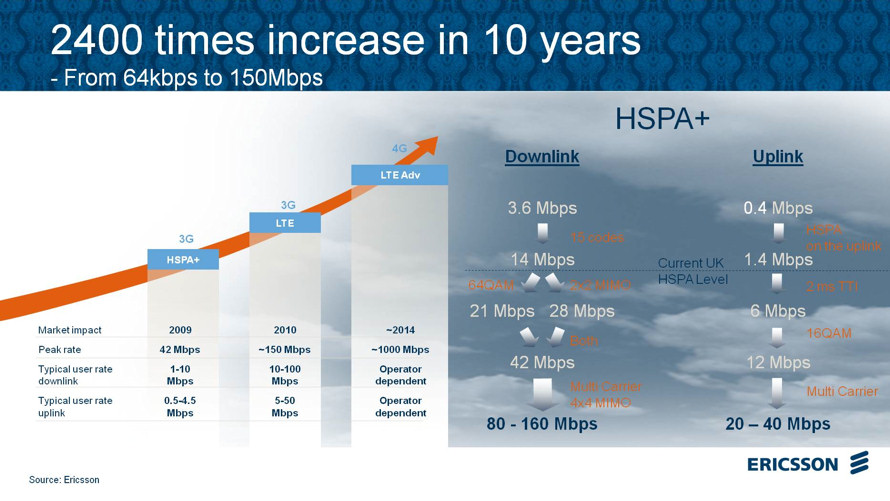
Update from the LTE/SAE Trial Initiative: Presentation at LTE Forum 2009, Lisbon by Martin Ljungberg, Ericsson
Source: GSA
The LTE/SAE Trial Initiative (LSTI) is a global, collaborative technology trial initiative focused on accelerating the availability of commercial and interoperable next generation LTE mobile broadband systems. The Initiative was formally launched in May 2007 by leading telecommunications companies. Since its inception LSTI has expanded to include 39 members.
This presentation provides an update of their important work, including progress on the Proof of Concept Activity for LTE FDD and TD LTE modes and the key results obtained, Interoperability Testing (IOT) and preparations for the Friendly Customer Trials.
Published by GSA with the kind permission of LTE/SAE Trial Initiative www.lstiforum.org
The LTE/SAE Trial Initiative (LSTI) is a global, collaborative technology trial initiative focused on accelerating the availability of commercial and interoperable next generation LTE mobile broadband systems. The Initiative was formally launched in May 2007 by leading telecommunications companies. Since its inception LSTI has expanded to include 39 members.
This presentation provides an update of their important work, including progress on the Proof of Concept Activity for LTE FDD and TD LTE modes and the key results obtained, Interoperability Testing (IOT) and preparations for the Friendly Customer Trials.
Published by GSA with the kind permission of LTE/SAE Trial Initiative www.lstiforum.org
Friday, October 9, 2009
Alcatel-Lucent is testing LTE technology for Digital Dividend in Stuttgart
Source: portel.de
At its headquarters in Stuttgart, Alcatel-Lucent built an end-to-end testing center for LTE and started the first tests for use in the frequency range of 800 MHz, the so-called Digital Dividend.
The article is in German. - Hyung
At its headquarters in Stuttgart, Alcatel-Lucent built an end-to-end testing center for LTE and started the first tests for use in the frequency range of 800 MHz, the so-called Digital Dividend.
The article is in German. - Hyung
INTERVIEW: Telco Tie-Ups More Likely As Cos Eye LTE -NSN CTO
Source: The Wall Street Journal
The telecoms industry may see more tie-ups in the run up to the commercial deployment of Long Term Evolution, or LTE, the next generation of wireless technology, the chief technical officer of equipment vendor Nokia Siemens Networks said Wednesday.
The telecoms industry may see more tie-ups in the run up to the commercial deployment of Long Term Evolution, or LTE, the next generation of wireless technology, the chief technical officer of equipment vendor Nokia Siemens Networks said Wednesday.
VT Silicon Announces World’s First Silicon Power Amplifier for 4G Mobile Devices
Source: VT Silicon press release
VT Silicon, a fabless semiconductor startup in Atlanta, GA, today announced the industry’s first silicon-based power amplifier capable of meeting the stringent operating requirements of 4G wireless data transmissions. This breakthrough milestone was achieved after 2 ½ years of privately funded development by using the company’s patented Linearity Enhancement Technology (LET™) to achieve the power, efficiency, and linearity required by today’s battery-powered 4G broadband mobile devices. The use of silicon (Silicon Germanium, or SiGe) instead of the traditional, more expensive Gallium Arsenide (GaAs) allows a significantly lower cost device with a much higher level of integration. The new PA design has been shown to compete effectively with GaAs PAs on key 4G specifications such as EVM, PAE, and ACPR as defined by the WiMAX Forum™ and 3GPP.
VT Silicon, a fabless semiconductor startup in Atlanta, GA, today announced the industry’s first silicon-based power amplifier capable of meeting the stringent operating requirements of 4G wireless data transmissions. This breakthrough milestone was achieved after 2 ½ years of privately funded development by using the company’s patented Linearity Enhancement Technology (LET™) to achieve the power, efficiency, and linearity required by today’s battery-powered 4G broadband mobile devices. The use of silicon (Silicon Germanium, or SiGe) instead of the traditional, more expensive Gallium Arsenide (GaAs) allows a significantly lower cost device with a much higher level of integration. The new PA design has been shown to compete effectively with GaAs PAs on key 4G specifications such as EVM, PAE, and ACPR as defined by the WiMAX Forum™ and 3GPP.
Thursday, October 8, 2009
Kyocera plans Android, CDMA/LTE devices
Source: FierceWireless
Handset maker Kyocera announced plans to launch an Android device next year. The company also said it would release a dual-mode CDMA/LTE device in 2011. That device could sport the Android platform.
Handset maker Kyocera announced plans to launch an Android device next year. The company also said it would release a dual-mode CDMA/LTE device in 2011. That device could sport the Android platform.
Lack of LTE Devices Worries Operators
Source: PC World
The LTE (Long-Term Evolution) modems shown at ITU Telecom World are still very much under development and will be ready to ship toward the end of next year, according to vendors.
The LTE (Long-Term Evolution) modems shown at ITU Telecom World are still very much under development and will be ready to ship toward the end of next year, according to vendors.
Clearwire Can't Stray From WiMax 'Til 2011
Source: Unstrung
Clearwire LLC cannot switch from mobile WiMax to Long Term Evolution (LTE), even if it wanted to. At least that's the case until 2011 because of an agreement it has in place with Intel Corp. (Nasdaq: INTC), Unstrung has learned.
Clearwire LLC cannot switch from mobile WiMax to Long Term Evolution (LTE), even if it wanted to. At least that's the case until 2011 because of an agreement it has in place with Intel Corp. (Nasdaq: INTC), Unstrung has learned.
Taoglas Launch First LTE Antenna
Source: Taoglas press release
Taoglas, the leading M2M antenna provider, today released the first LTE and WiMax antenna solutions for the M2M market. There are two antenna solutions: embedded and external. The FXP400 and FXP100 are ultra wideband, embedded antennas. They offer the best market efficiency of over 70% for WiMax (2100~4320MHz) and LTE (690-940 MHz and 1720-3130 MHz). The LTEA.4000 external solution for packaged M2M 3G/4G LTE markets has an efficiency of over 40% and connects externally to terminals and LTE equipment. These antennas will be showcased at the Taoglas booth #551 in the M2M Zone Pavilion at CTIA.
Taoglas, the leading M2M antenna provider, today released the first LTE and WiMax antenna solutions for the M2M market. There are two antenna solutions: embedded and external. The FXP400 and FXP100 are ultra wideband, embedded antennas. They offer the best market efficiency of over 70% for WiMax (2100~4320MHz) and LTE (690-940 MHz and 1720-3130 MHz). The LTEA.4000 external solution for packaged M2M 3G/4G LTE markets has an efficiency of over 40% and connects externally to terminals and LTE equipment. These antennas will be showcased at the Taoglas booth #551 in the M2M Zone Pavilion at CTIA.
3GPP Partners propose IMT-Advanced radio technology
Source: 3GPP press release

The 3GPP Partners, which unite more than 370 leading mobile technology companies, made a formal submission to the ITU yesterday, proposing that LTE Release 10 & beyond (LTE-Advanced) be evaluated as a candidate for IMT-Advanced.
The ITU had set a deadline of 7 October for proposals to be received and 3GPP responded by submitting a comprehensive description of LTE-Advanced, an evolution of the LTE technology which has received considerable support from the world’s leading mobile operators. The submission was made jointly in the name of the 3GPP Organizational Partners: ARIB, ATIS, CCSA, ETSI, TTA and TTC, which represent the North American, European and Asian regions and make 3GPP a truly global initiative.
Adrian Scrase, Head of the 3GPP Mobile Competence Centre, speaking in Geneva at the ITU Telecom 2009 Forum, stressed the evolutionary aspects of the LTE-Advanced proposal, commenting: “More than 30 operators have already announced their intention to deploy the LTE technology, and the evolution possibilities of LTE Release 10 & beyond provides security for their investments for many years to come.”
Full details of the proposal can be downloaded from the 3GPP website at:
RP-090736 (Cover sheet) http://www.3gpp.org/ftp/tsg_ran/TSG_RAN/TSGR_45/Documents/RP-090736.zip
RP-090939 (3GPP Submission Package for IMT-Advanced) http://www.3gpp.org/ftp/tsg_ran/TSG_RAN/TSGR_45/Documents/RP-090739.zip
The 3GPP Partners, which unite more than 370 leading mobile technology companies, made a formal submission to the ITU yesterday, proposing that LTE Release 10 & beyond (LTE-Advanced) be evaluated as a candidate for IMT-Advanced.
The ITU had set a deadline of 7 October for proposals to be received and 3GPP responded by submitting a comprehensive description of LTE-Advanced, an evolution of the LTE technology which has received considerable support from the world’s leading mobile operators. The submission was made jointly in the name of the 3GPP Organizational Partners: ARIB, ATIS, CCSA, ETSI, TTA and TTC, which represent the North American, European and Asian regions and make 3GPP a truly global initiative.
Adrian Scrase, Head of the 3GPP Mobile Competence Centre, speaking in Geneva at the ITU Telecom 2009 Forum, stressed the evolutionary aspects of the LTE-Advanced proposal, commenting: “More than 30 operators have already announced their intention to deploy the LTE technology, and the evolution possibilities of LTE Release 10 & beyond provides security for their investments for many years to come.”
Full details of the proposal can be downloaded from the 3GPP website at:
RP-090736 (Cover sheet) http://www.3gpp.org/ftp/tsg_ran/TSG_RAN/TSGR_45/Documents/RP-090736.zip
RP-090939 (3GPP Submission Package for IMT-Advanced) http://www.3gpp.org/ftp/tsg_ran/TSG_RAN/TSGR_45/Documents/RP-090739.zip
Wednesday, October 7, 2009
ATIS Webinar: Realizing the benefits of LTE
Source: ATIS
Date: Tuesday, October 13, 2009
Time: 1:00 – 2:00 pm EDT
Discussion: As operators will need increased capacity to accommodate mobile IP capabilities in the near future, many are racing to evolve their networks to Long Term Evolution (LTE). Among next generation standards, LTE has emerged as the preferred solution to bring rapid evolution from diverse 3rd Generation Partnership Project (3GPP) and 3GPP2 legacy networks.
Just what implications does the LTE-evolution bring? What does your legacy network mean? Once an operator commits to LTE, what kinds of new business can be derived, and what new revenue streams open? How will LTE -- a capitol intensive technology -- generate additional revenues for operators and their share holders?
During this webinar we will discuss and define:
* Code-Division Multiple Access (CDMA), Evolution Data Optimized (EVDO), High Speed Packet Access (HSPA), and the Evolution to LTE
* Network Efficiency enabled through LTE and IP based platforms
* The current ecosystem players and new entrants’ potential to drive tomorrow’s marketplace
* Market penetration, 400%+ subscriber adoption, and why we’ll see 50 billion connections
* Innovation and disruption from vertical industries that are further enabled through wireless broadband technology
Date: Tuesday, October 13, 2009
Time: 1:00 – 2:00 pm EDT
Discussion: As operators will need increased capacity to accommodate mobile IP capabilities in the near future, many are racing to evolve their networks to Long Term Evolution (LTE). Among next generation standards, LTE has emerged as the preferred solution to bring rapid evolution from diverse 3rd Generation Partnership Project (3GPP) and 3GPP2 legacy networks.
Just what implications does the LTE-evolution bring? What does your legacy network mean? Once an operator commits to LTE, what kinds of new business can be derived, and what new revenue streams open? How will LTE -- a capitol intensive technology -- generate additional revenues for operators and their share holders?
During this webinar we will discuss and define:
* Code-Division Multiple Access (CDMA), Evolution Data Optimized (EVDO), High Speed Packet Access (HSPA), and the Evolution to LTE
* Network Efficiency enabled through LTE and IP based platforms
* The current ecosystem players and new entrants’ potential to drive tomorrow’s marketplace
* Market penetration, 400%+ subscriber adoption, and why we’ll see 50 billion connections
* Innovation and disruption from vertical industries that are further enabled through wireless broadband technology
ITU Conference: Ericsson CTO Sees Growing Demand For LTE
Source: The Wall Street Journal
Demand for Long Term Evolution, or LTE, network equipment is likely to accelerate due to a continually strong need for fast data transfer, said Hakan Eriksson, Chief Technology Officer of L.M. Ericsson Telephone Co.
Demand for Long Term Evolution, or LTE, network equipment is likely to accelerate due to a continually strong need for fast data transfer, said Hakan Eriksson, Chief Technology Officer of L.M. Ericsson Telephone Co.
ng Connect Program expands LTE mobile broadband ecosystem with five new members; establishes two new labs and demonstration centers
Source: ng Connect Program press release
Today, the ng Connect Program announced that five new members – Creative Labs, Inc., Gemalto, Kabillion, R360 and V-Gate - have joined its diverse ecosystem of infrastructure, device, content and applications companies working to enhance the next generation broadband end user experience. The program is also launching today two new next generation service Proofs of Concept (PoC) for secure access to mobile networks and interactive digital signage. ng Connect PoCs are now available in two new labs in the Paris area for demonstration to European operators. Today’s announcement brings total membership in the program to 26 and completed PoCs to eight in less than a year after its launch.
Today, the ng Connect Program announced that five new members – Creative Labs, Inc., Gemalto, Kabillion, R360 and V-Gate - have joined its diverse ecosystem of infrastructure, device, content and applications companies working to enhance the next generation broadband end user experience. The program is also launching today two new next generation service Proofs of Concept (PoC) for secure access to mobile networks and interactive digital signage. ng Connect PoCs are now available in two new labs in the Paris area for demonstration to European operators. Today’s announcement brings total membership in the program to 26 and completed PoCs to eight in less than a year after its launch.
First LTE Networks Will Deliver 20 Mbps of Download Speed
Source: PC World
When the first LTE (Long Term Evolution) networks and devices are launched next year, users can expect to see a download speed of about 20 Mbps, according to Motorola and ZTE.
On the show floor at ITU World, ZTE and Fujitsu are showing upcoming modems that support download speeds of up to 100 Mbps (bits per second) and upload speeds of up to 50 Mbps when connected to an LTE network, according to their respective spec sheets.
But no user will ever see those kinds of speeds. The real-world bandwidth will instead be about 20 Mbps when downloading data and 5 Mbps when uploading data, according to Xiaodong Zhu, CTO at ZTE in Western Europe. Those numbers are seconded by Stephane Daeuble, senior manager at Motorola LTE Global Marketing.
When the first LTE (Long Term Evolution) networks and devices are launched next year, users can expect to see a download speed of about 20 Mbps, according to Motorola and ZTE.
On the show floor at ITU World, ZTE and Fujitsu are showing upcoming modems that support download speeds of up to 100 Mbps (bits per second) and upload speeds of up to 50 Mbps when connected to an LTE network, according to their respective spec sheets.
But no user will ever see those kinds of speeds. The real-world bandwidth will instead be about 20 Mbps when downloading data and 5 Mbps when uploading data, according to Xiaodong Zhu, CTO at ZTE in Western Europe. Those numbers are seconded by Stephane Daeuble, senior manager at Motorola LTE Global Marketing.
WiMAX(TM) Ecosystem Backs IEEE 802.16m for IMT-Advanced and Future Proof Roadmap
Source: WiMAX Forum press release
The WiMAX Forum® and executives from premier suppliers and operators were on hand during ITU Telecom World 2009 to express their commitment to build and trial WiMAX Release 2 based on the IEEE 802.16m standard. Ecosystem participants represented Alvarion, Beceem, Cisco, Clearwire, Huawei, Intel, KT, Samsung, UQC, Yota and ZTE. Also revealed was a milestone of 500 network deployments in more than 145 countries – placing WiMAX as the leading mobile broadband technology.
The WiMAX Forum, along with 50 companies, announced the endorsement of IEEE’s submission to ITU-R that proposes an IEEE 802.16m-based candidate for IMT-Advanced. The WiMAX Forum also announced that it will finalize its WiMAX Release 2 specification in parallel with IEEE 802.16m and IMT-Advanced, ensuring that WiMAX Release 2 networks and devices will remain backward compatible with legacy WiMAX Release 1 based on IEEE 802.16e.
The WiMAX Forum® and executives from premier suppliers and operators were on hand during ITU Telecom World 2009 to express their commitment to build and trial WiMAX Release 2 based on the IEEE 802.16m standard. Ecosystem participants represented Alvarion, Beceem, Cisco, Clearwire, Huawei, Intel, KT, Samsung, UQC, Yota and ZTE. Also revealed was a milestone of 500 network deployments in more than 145 countries – placing WiMAX as the leading mobile broadband technology.
The WiMAX Forum, along with 50 companies, announced the endorsement of IEEE’s submission to ITU-R that proposes an IEEE 802.16m-based candidate for IMT-Advanced. The WiMAX Forum also announced that it will finalize its WiMAX Release 2 specification in parallel with IEEE 802.16m and IMT-Advanced, ensuring that WiMAX Release 2 networks and devices will remain backward compatible with legacy WiMAX Release 1 based on IEEE 802.16e.
DoCoMo's LTE Chip Offers Download Speeds of 100Mbps
Source: PC World
NTT DoCoMo expects to have an LTE (Long-term Evolution) chipset that supports download speeds up to 100M bits per second ready for commercial use at the end of 2010.
When DoCoMo rolls out LTE cellular services next year, the technology will offer significantly faster data speeds than current 3G networks. A sample of the LTE-PF chipset was on display at DoCoMo's booth at the Ceatec exhibition in Chiba, Japan. Measuring 6.8 millimeters square, the chip offers download speeds of 100M bps and upload speeds of 50M bps.
NTT DoCoMo expects to have an LTE (Long-term Evolution) chipset that supports download speeds up to 100M bits per second ready for commercial use at the end of 2010.
When DoCoMo rolls out LTE cellular services next year, the technology will offer significantly faster data speeds than current 3G networks. A sample of the LTE-PF chipset was on display at DoCoMo's booth at the Ceatec exhibition in Chiba, Japan. Measuring 6.8 millimeters square, the chip offers download speeds of 100M bps and upload speeds of 50M bps.
Monday, October 5, 2009
Webinar: 4G Mobile Broadband - The Network Impact By Cisco and Light Reading Analyst
Wed Oct 21 2009 | 11:00 AM EDT | 1 hour
Video Webinar: 4G Mobile Broadband: The Network Impact
By Cisco and Light Reading Analyst
Video Webinar: 4G Mobile Broadband: The Network Impact
By Cisco and Light Reading Analyst
Verizon Wireless Announces 4G Venture Forum, Designed To Encourage Innovation For Advanced Mobile Networks
Source: Verizon Wireless press release
Verizon Wireless, the nation’s leading wireless provider, announced today the creation of the 4G Venture Forum (4GVF), a new initiative which uniquely brings together financial investment, product incubation and market validation for products and services that will harness fourth generation (4G) wireless networks. The 4GVF is a collaboration of Verizon Wireless; highly-regarded venture funds including Alcatel-Lucent Ventures, Charles River Partners, New Venture Partners, North Bridge Venture Partners, Norwest Venture Partners (NVP) and Redpoint Ventures to facilitate the identification and commercialization of next-generation 4G related technologies; and both Alcatel-Lucent and Ericsson, the primary network infrastructure providers for Verizon Wireless’ upcoming 4G Long Term Evolution (LTE) network.
Verizon Wireless, the nation’s leading wireless provider, announced today the creation of the 4G Venture Forum (4GVF), a new initiative which uniquely brings together financial investment, product incubation and market validation for products and services that will harness fourth generation (4G) wireless networks. The 4GVF is a collaboration of Verizon Wireless; highly-regarded venture funds including Alcatel-Lucent Ventures, Charles River Partners, New Venture Partners, North Bridge Venture Partners, Norwest Venture Partners (NVP) and Redpoint Ventures to facilitate the identification and commercialization of next-generation 4G related technologies; and both Alcatel-Lucent and Ericsson, the primary network infrastructure providers for Verizon Wireless’ upcoming 4G Long Term Evolution (LTE) network.
The Verizon Wireless LTE Innovation Center Lab Opens
Source: Verizon Wireless press release
From CTIA Wireless IT & Entertainment 2009, Verizon Wireless took another step in delivering on its promise of collaborative innovation over the upcoming fourth generation (4G) Long Term Evolution (LTE) network with the opening of the lab at the Verizon Wireless LTE Innovation Center. In addition, the wireless leader also introduced a virtual LTE Innovation Center where device developers can access an online portal (www.lte.vzw.com) to discover support services for participants at the Verizon Wireless LTE Innovation Center and directly communicate with Center engineers.
From CTIA Wireless IT & Entertainment 2009, Verizon Wireless took another step in delivering on its promise of collaborative innovation over the upcoming fourth generation (4G) Long Term Evolution (LTE) network with the opening of the lab at the Verizon Wireless LTE Innovation Center. In addition, the wireless leader also introduced a virtual LTE Innovation Center where device developers can access an online portal (www.lte.vzw.com) to discover support services for participants at the Verizon Wireless LTE Innovation Center and directly communicate with Center engineers.
Mocana Releases Industry's First LTE Security Solution for 4G Mobile Device Design Teams
Source: Mocana press release
Mocana announced first shipments of NanoCert LTE, the mobile industry's first software developer's solution focused on securing LTE / 3GPP / 4G infrastructure devices like eNodeB base stations and Serving Gateways.
Mocana announced first shipments of NanoCert LTE, the mobile industry's first software developer's solution focused on securing LTE / 3GPP / 4G infrastructure devices like eNodeB base stations and Serving Gateways.
Motorola Provides World’s First Live 2.6GHz TD-LTE Drive Demonstration for CMCC at ITU Telecom World 2009
Source: Motorola press release
Motorola, Inc. announced today that it has successfully deployed a Time Division Duplex Long-Term Evolution (TD-LTE) network in the streets of Geneva to support China Mobile Communications Corporation’s (CMCC) presence at the Geneva PALEXPO during ITU Telecom World 2009.
Motorola, Inc. announced today that it has successfully deployed a Time Division Duplex Long-Term Evolution (TD-LTE) network in the streets of Geneva to support China Mobile Communications Corporation’s (CMCC) presence at the Geneva PALEXPO during ITU Telecom World 2009.
ZTE sees good opportunity to penetrate developed markets with LTE
Source: total telecom
ZTE said LTE will provide a good opportunity for the Chinese equipment manufacturer to penetrate more developed markets in future as the OFDM-based technology "does not have much to do with the past".
ZTE said LTE will provide a good opportunity for the Chinese equipment manufacturer to penetrate more developed markets in future as the OFDM-based technology "does not have much to do with the past".
ZTE and ASTRI to demonstrate industry’s first cross-vendor LTE TDD IOT at ITU Telecom World
Source: PRLog
ZTE and ASTRI will jointly demonstrate LTE TDD (Long Term Evolution Time Division Duplex) wireless HD video IOT calls at ITU Telecom World 2009 in Geneva. This is also the first cross-vendor LTE TDD IOT successfully completed in the industry.
ZTE and ASTRI will jointly demonstrate LTE TDD (Long Term Evolution Time Division Duplex) wireless HD video IOT calls at ITU Telecom World 2009 in Geneva. This is also the first cross-vendor LTE TDD IOT successfully completed in the industry.
Anite and LG Electronics verify the first LTE Conformance Test Cases
Source: Anite Wireless press release
Anite, a global leader in testing technology for the wireless industry, and LG Electronics (LG), a global leader and technology innovator in mobile communications, today announced the successful verification of the industry’s first LTE protocol conformance test cases. Anite and LG Electronics have made the results from their groundbreaking work available to the members of the 3GPP standards body, so that the entire mobile industry may benefit from this milestone achievement.
Anite, a global leader in testing technology for the wireless industry, and LG Electronics (LG), a global leader and technology innovator in mobile communications, today announced the successful verification of the industry’s first LTE protocol conformance test cases. Anite and LG Electronics have made the results from their groundbreaking work available to the members of the 3GPP standards body, so that the entire mobile industry may benefit from this milestone achievement.
Cadence Enables Early Validation of Next-Gen 4G/LTE Wireless Designs with Rohde & Schwarz T&M Solution
Source: Cadence press release
Cadence Design Systems, Inc., the leader in global electronic design innovation, today announced that it has developed a protocol testing solution that enables early validation of next-generation 4G/LTE wireless SoC/ASIC designs. The solution integrates the Cadence® Incisive® Palladium® accelerator/emulator and the Rohde & Schwarz CMW500 LTE network emulator, allowing wireless/mobile companies to test their complex designs much earlier than when silicon becomes available, thereby providing them with an opportunity to leapfrog over competitors.
Cadence Design Systems, Inc., the leader in global electronic design innovation, today announced that it has developed a protocol testing solution that enables early validation of next-generation 4G/LTE wireless SoC/ASIC designs. The solution integrates the Cadence® Incisive® Palladium® accelerator/emulator and the Rohde & Schwarz CMW500 LTE network emulator, allowing wireless/mobile companies to test their complex designs much earlier than when silicon becomes available, thereby providing them with an opportunity to leapfrog over competitors.
Sunday, October 4, 2009
ZTE Shows LTE Modems
Source: PC World
Chinese vendor ZTE is showing off two LTE (Long Term Evolution) modems, which on paper will support mobile broadband speeds of up to 100 Mbps, at ITU Telecom World in Geneva.
The AL620 and the AL600 will both support download speeds of up 100 Mbps (bits per second) and upload speeds of up to 50 Mbps when connected to an LTE network, according to their respective spec sheets. Both modems come in the shape of a USB (Universal Serial Bus) dongle.
Chinese vendor ZTE is showing off two LTE (Long Term Evolution) modems, which on paper will support mobile broadband speeds of up to 100 Mbps, at ITU Telecom World in Geneva.
The AL620 and the AL600 will both support download speeds of up 100 Mbps (bits per second) and upload speeds of up to 50 Mbps when connected to an LTE network, according to their respective spec sheets. Both modems come in the shape of a USB (Universal Serial Bus) dongle.
Fujitsu Selected as Vendor for Development of NTT DOCOMO's LTE Mobile Data Communications Terminal
Source: Fujitsu press release
Fujitsu today announced that it has been selected by NTT DOCOMO, INC. as a vendor for developing a mobile data communications terminal based on LTE technology, a next-generation mobile communications standard.
Fujitsu today announced that it has been selected by NTT DOCOMO, INC. as a vendor for developing a mobile data communications terminal based on LTE technology, a next-generation mobile communications standard.
Friday, October 2, 2009
Mobile broadband growth - Reports from Operators Worldwide by GSA
Source: GSA
Recent announcements by leading mobile network operators confirming mobile broadband growth enabled by WCDMA-HSPA.
Recent announcements by leading mobile network operators confirming mobile broadband growth enabled by WCDMA-HSPA.
NEC Produces World's Smallest Class All-in-One Compact Core Network System (EPC) for LTE
Source: NEC press release
NEC Corporation announced today that its new Compact EPC system will be on display at LTE Forum 2009. An all-in-one core network system, it qualifies for the world's smallest class by incorporating MME and Serving-GW/PDN-GW into an area measuring 483mm(L)x222mm(H)x497mm(D) that fits within the 5U-height of a standard 19-inch rack.
Each compact system is capable of simultaneously accommodating nearly 300,000 subscribers while controlling more than 1,000 LTE base stations. All functions are loaded into compact, blade integrated AdvancedTCA(R), chassis. This provides the operator with a flexible and reliable way of moving to 4G.
NEC Corporation announced today that its new Compact EPC system will be on display at LTE Forum 2009. An all-in-one core network system, it qualifies for the world's smallest class by incorporating MME and Serving-GW/PDN-GW into an area measuring 483mm(L)x222mm(H)x497mm(D) that fits within the 5U-height of a standard 19-inch rack.
Each compact system is capable of simultaneously accommodating nearly 300,000 subscribers while controlling more than 1,000 LTE base stations. All functions are loaded into compact, blade integrated AdvancedTCA(R), chassis. This provides the operator with a flexible and reliable way of moving to 4G.
'Millions' of LTE Handsets by 2012?
Source: Unstrung
Long Term Evolution (LTE) chip developer Altair Semiconductor is predicting that the first "real" LTE handsets will first arrive on the market in the second half of 2010, but it expects the next-gen phones to go mass market until 2012.
Long Term Evolution (LTE) chip developer Altair Semiconductor is predicting that the first "real" LTE handsets will first arrive on the market in the second half of 2010, but it expects the next-gen phones to go mass market until 2012.
Thursday, October 1, 2009
DOCOMO, NEC, Panasonic Mobile Communications, Fujitsu Push Ahead with LTE Mobile-Terminal Platform
Source: NTT DOCOMO press release
NTT DOCOMO, INC., NEC Corporation, Panasonic Mobile Communications Co., Ltd. and Fujitsu Limited announced today that they are making progress with their joint development of "LTE-PF", a mobile-terminal platform based on Long Term Evolution (LTE), a coming mobile communication standard for super-fast downlinks above 100 Mbps and uplinks above 50 Mbps.
The four companies have completed the development of an LTE-PF chipset engineering sample and are now evaluating its main functions. The sample will be exhibited at the NTT Group stand at ITU Telecom World 2009 in Geneva, Switzerland from October 5 to 9 and the DOCOMO stand at CEATEC JAPAN 2009 at Makuhari Messe, Chiba Prefecture, Japan from October 6 to 10.
NTT DOCOMO, INC., NEC Corporation, Panasonic Mobile Communications Co., Ltd. and Fujitsu Limited announced today that they are making progress with their joint development of "LTE-PF", a mobile-terminal platform based on Long Term Evolution (LTE), a coming mobile communication standard for super-fast downlinks above 100 Mbps and uplinks above 50 Mbps.
The four companies have completed the development of an LTE-PF chipset engineering sample and are now evaluating its main functions. The sample will be exhibited at the NTT Group stand at ITU Telecom World 2009 in Geneva, Switzerland from October 5 to 9 and the DOCOMO stand at CEATEC JAPAN 2009 at Makuhari Messe, Chiba Prefecture, Japan from October 6 to 10.
Subscribe to:
Posts (Atom)